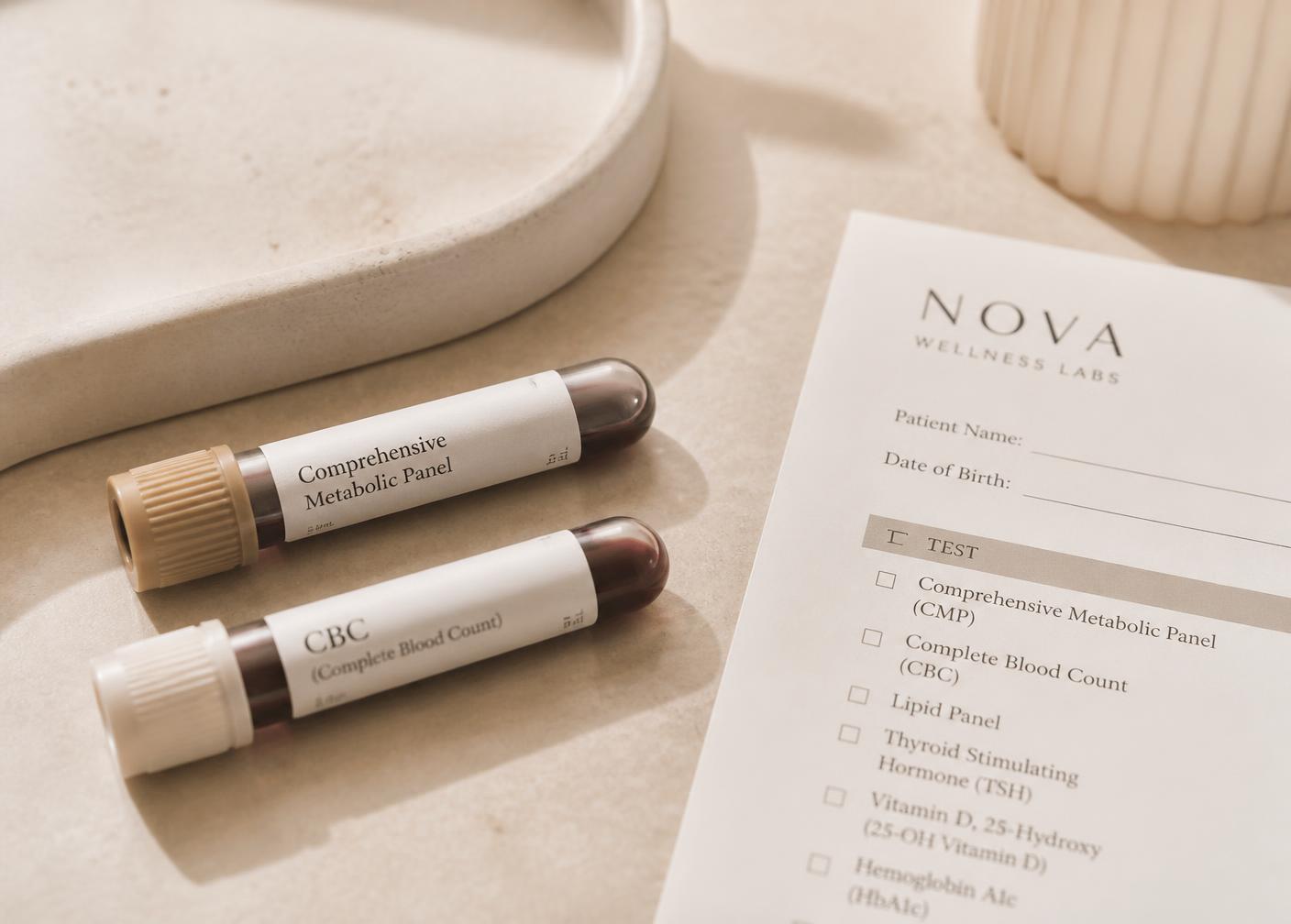
Hashimoto's thyroiditis is an autoimmune condition in which the immune system gradually attacks the thyroid gland, reducing how much thyroid hormone it can make. It is the most common cause of hypothyroidism in the United States and is confirmed with thyroid antibody testing (TPO and thyroglobulin antibodies) alongside TSH and free thyroid hormone levels. Symptoms often fluctuate for years before standard labs look clearly abnormal.
4.8 stars · 106 patient reviews
Dr. Hitendra H. Shah, MD · 40+ years · 5,000+ patients treated
Patients across Diamond Bar, Chino Hills, Walnut, Rowland Heights, Brea, and Pomona most often describe the following. You do not need all of them for Hashimoto's to be worth evaluating.
Fatigue that sleep does not fix
Fluctuating energy — good weeks followed by crashes
Weight gain or difficulty losing weight
Brain fog and poor concentration
Cold intolerance
Dry skin and thinning hair
Neck fullness or a swollen thyroid (goiter)
Joint and muscle aches
Low mood, anxiety, or irritability
Constipation and heavy or irregular periods
Our approach
How Dr. Shah approaches Hashimoto's
Functional, whole-person care: comprehensive testing, a search for the underlying cause, careful medication optimization, and lifestyle and hormone support — delivered by one named specialist rather than a rotating hospital group.
Testing beyond a basic TSH
A single TSH value can look acceptable while an autoimmune process is well underway. Dr. Shah reviews TSH together with free T4, free T3, TPO and thyroglobulin antibodies, and — when the picture warrants it — reverse T3, so the diagnosis rests on the whole pattern rather than one number.
Looking for what is driving the immune response
Hashimoto's rarely travels alone. Iron and ferritin, vitamin D, B12, blood sugar and insulin, gut symptoms, chronic stress, and other autoimmune conditions are reviewed because they influence how the thyroid behaves and how well treatment works.
Medication optimization when it is needed
When thyroid hormone replacement is appropriate, the goal is how you feel as well as how your labs read. Dr. Shah revisits dosing and formulation over follow-up visits rather than setting a prescription once and leaving it alone.
Lifestyle and hormone support
Nutrition, sleep, stress load, and sex-hormone shifts around perimenopause all change the thyroid picture. These are addressed in the same visit rather than referred out, as part of whole-person care.
One named physician, not a rotating group
Dr. Hitendra H. Shah has more than 40 years in practice and has treated over 5,000 patients. You see the same physician at every visit, which is how subtle changes in an autoimmune condition actually get noticed.
This page is general health education about hashimoto's thyroiditis and is not medical advice, a diagnosis, or a promise of any particular result. Treatment decisions, including any medication, are made individually during a visit.
Next step
When to see a thyroid specialist
Consider a focused evaluation in Diamond Bar if any of the following apply to you:
Your TPO antibodies are elevated, even if your TSH is still in range.
You are on thyroid medication and still feel fatigued, foggy, or cold.
Your thyroid labs bounce between visits without a clear explanation.
You have a family history of thyroid or autoimmune disease plus symptoms.
You notice neck swelling, pressure, or difficulty swallowing.
You are planning a pregnancy or are pregnant and have known thyroid antibodies.
Answers
Hashimoto's: questions patients ask
How is Hashimoto's thyroiditis diagnosed?
Hashimoto's thyroiditis is diagnosed through a full thyroid panel that includes thyroid antibody testing — TPO and thyroglobulin (Tg) antibodies — alongside TSH, Free T4, and Free T3. Early detection helps manage progression before the thyroid loses more function.
Can Hashimoto's be reversed?
Hashimoto's is a chronic autoimmune condition and there is no proven cure that eliminates it permanently. Antibody levels and symptoms can improve substantially with consistent treatment, correction of nutrient deficiencies, and attention to stress, sleep, and diet, and many patients feel close to normal. The realistic goal is long-term control and good quality of life, not a guaranteed cure.
What tests diagnose Hashimoto's thyroiditis?
Diagnosis is based on thyroid peroxidase (TPO) antibodies and thyroglobulin antibodies, interpreted together with TSH and free T4. Free T3 and a thyroid ultrasound may be added when the gland is enlarged or nodular. Antibodies can be positive years before TSH becomes abnormal, which is why antibody testing matters.
Can you have Hashimoto's with a normal TSH?
Yes. Elevated thyroid antibodies with a normal TSH is common in early Hashimoto's. The thyroid is still able to compensate, but symptoms may already be present and thyroid function should be monitored over time rather than dismissed.
Does everyone with Hashimoto's need medication?
No. Treatment depends on thyroid hormone levels, symptoms, and factors such as pregnancy or planned pregnancy. Some patients with positive antibodies and normal hormone levels are monitored rather than medicated, while others benefit from thyroid hormone replacement. That decision is made individually at your visit.
Does diet affect Hashimoto's?
Diet does not cure Hashimoto's, but adequate iron, vitamin D, selenium, and B12, stable blood sugar, and reducing foods that trigger your own symptoms often improve energy and how well medication works. Any elimination diet should be discussed with your physician rather than started indefinitely on your own.
How often should Hashimoto's be rechecked?
Most patients are rechecked every 6 to 12 weeks while a dose is being adjusted, then every 6 to 12 months once stable. Symptoms, pregnancy, and significant weight or medication changes are all reasons to test sooner.